Joining fees are one of the least transparent parts of golf club membership. Some clubs make them explicit and relatively modest. Others say very little publicly, meaning golfers often rely on word of mouth or local knowledge to understand the true cost of entry.
Using data scraped from the websites of 868 golf clubs in my directory, this article looks at how common joining fees are, how large they tend to be, and where the highest published examples sit within the wider market.
As with all pricing analysis, it is important to recognise the limitations of what is publicly available. These are addressed later in the article.
How many clubs charge a joining fee?
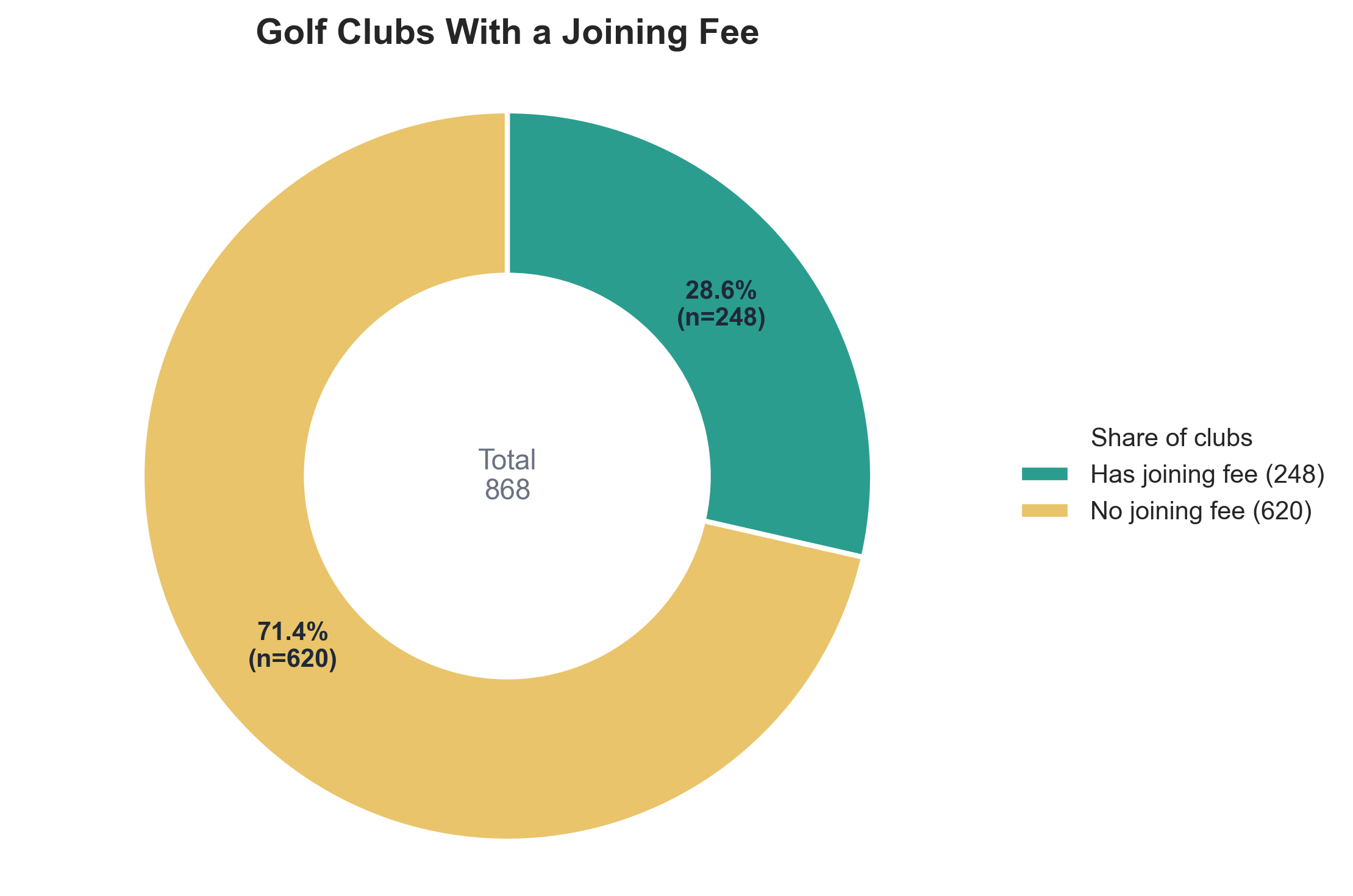
Out of the 868 English golf clubs in the directory, 248 clubs charge a joining fee, while 620 do not. That means 28.6% of clubs require an upfront payment, with the remaining 71.4% operating without a joining fee. For most golfers, there is still a wide choice of clubs where annual subscriptions are the only financial commitment required.
Where are joining fees most common?
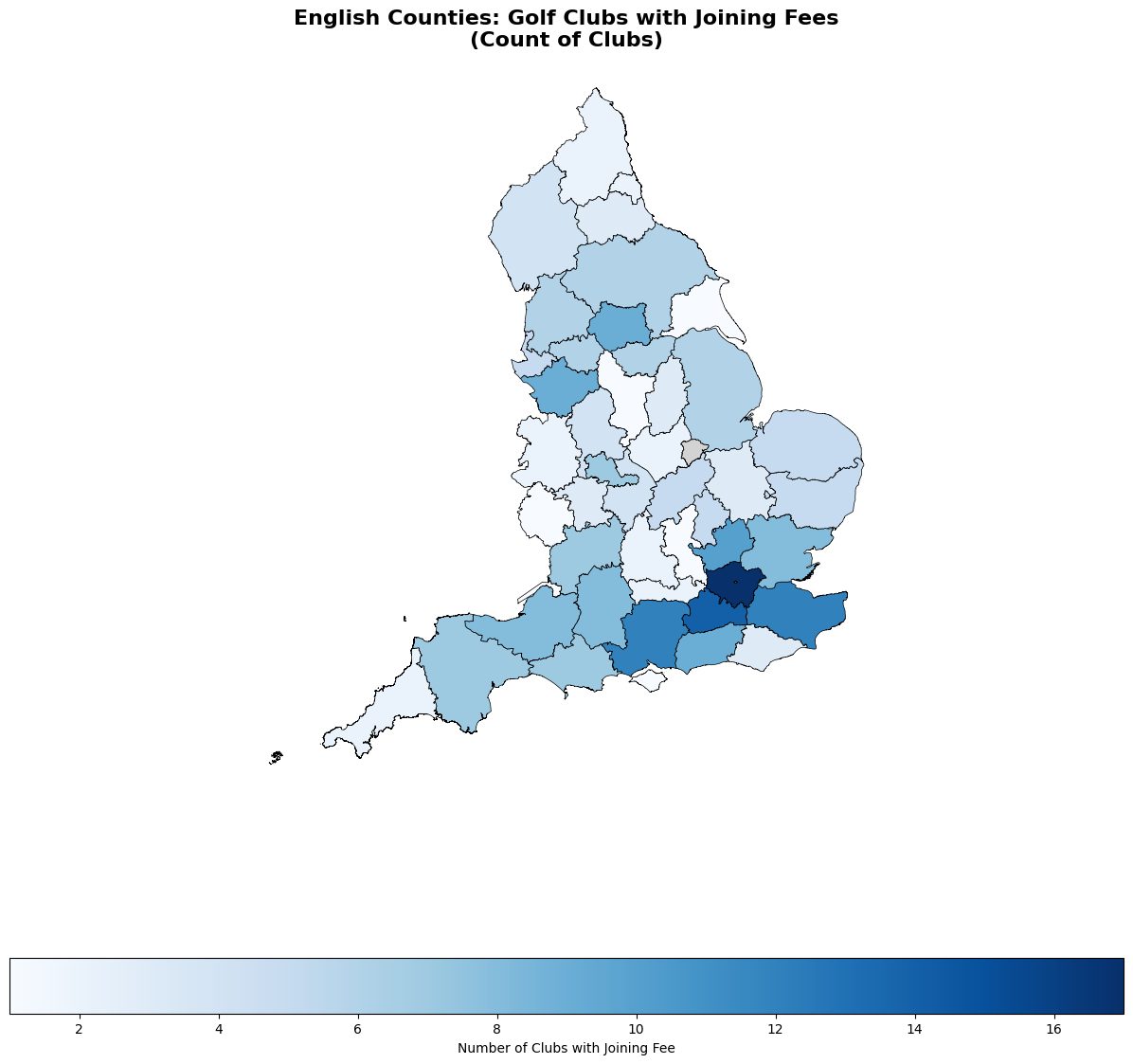
The map below shows English counties shaded by the number of clubs that publish a joining fee. The concentration is clearest in and around London, where the largest clusters of clubs sit within a relatively small geographic area.
| # | County | Clubs with joining fees |
|---|---|---|
| 1 | Greater London | 17 |
| 2 | Surrey | 14 |
| 3 | Kent | 12 |
How expensive are joining fees when they exist?
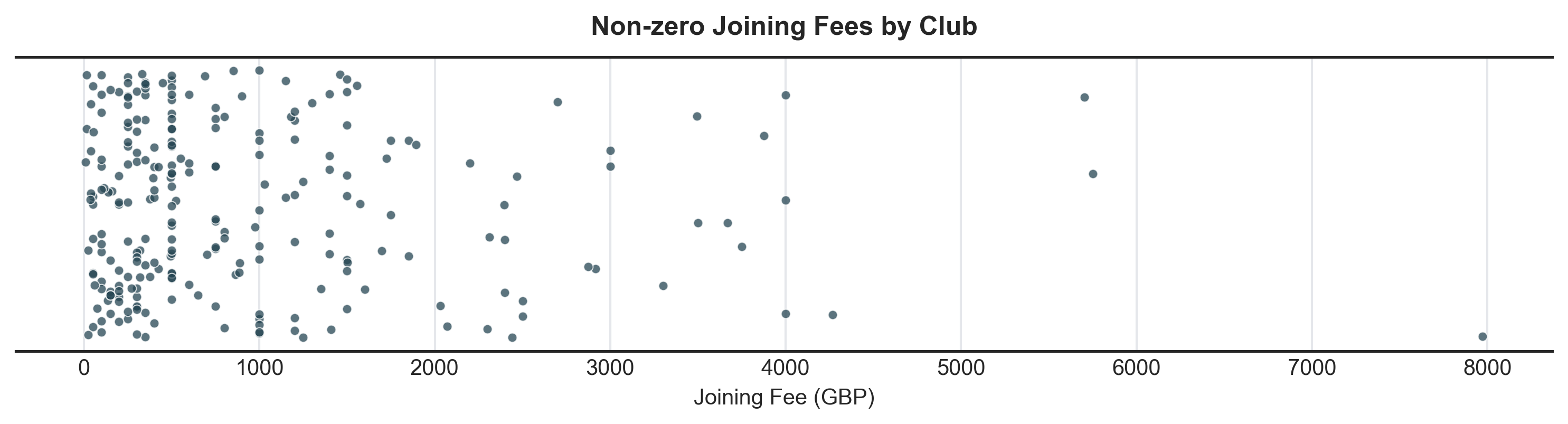
Focusing only on clubs that do charge a joining fee, a clear distribution emerges. The majority of joining fees sit at the lower end of the scale, functioning more as a modest commitment than a significant financial hurdle.
- 136 clubs have a joining fee of £500 or less.
- There are progressively fewer clubs through the £1,000 to £2,000 range.
- Only 30 clubs in the dataset have a joining fee of £2,000 or more.
- Of those 30, nine are in Surrey, with most of the remainder in counties surrounding London.
A notable example outside the South East is Fulford Golf Club, which publishes a £3,000 joining fee, placing it among the highest in the dataset.
The highest published joining fees
The table below shows the highest joining fees published on club websites in the directory. Where multiple clubs share the same figure, they are grouped together.
| # | Club | Joining fee | Annual subscription | Notes |
|---|---|---|---|---|
| 1 | Hankley Common Golf Club | £7,971 | £2,657 | Joining fee set at exactly 3x annual subscription. |
| 2 | Liphook Golf Club | £5,750 | £2,300 | Fee can be phased over three years. |
| 3 | La Moye Golf Club | £5,702 | £1,900.90 | Entrance fee structured across membership stages. |
| 4 | Tandridge Golf Club | £4,268 | Not published | Long-established private members club. |
| 5 |
Hampstead Golf Club Parkstone Golf Club West Hill Golf Club |
£4,000 | Varies | Upper-tier published joining fees. |
Understanding the role of higher joining fees
At clubs charging higher joining fees, the fee is often part of a broader membership strategy rather than a simple price increase. Hankley Common, for example, combines a substantial joining fee with a Register of Interest system and a multi-year wait to enter the application process. This approach helps clubs:
- Manage demand where interest consistently exceeds available membership places.
- Maintain a stable, long-term member base with lower churn.
- Protect course access, tee availability, and the overall member experience.
In areas with dense populations and limited high-quality courses, joining fees can act as a tool to balance supply and demand, ensuring that membership numbers remain aligned with the capacity of the course.
Other clubs take a more flexible approach. Liphook Golf Club allows its joining fee to be spread over three years, while La Moye Golf Club structures its entrance fee across multiple stages on the path to full membership. These models recognise the value of commitment while reducing the immediate financial impact for new members.
A note on data limitations
What this means for golfers
Three key points stand out.
- Most golf clubs do not charge a joining fee, so there is still a broad and accessible membership market.
- Where joining fees do exist, they are usually modest, with the majority sitting well below £1,000.
- At the highest end, joining fees tend to reflect exceptional course quality, strong demand, and limited supply.
For golfers, understanding why a joining fee exists can be just as important as the size of the fee itself.